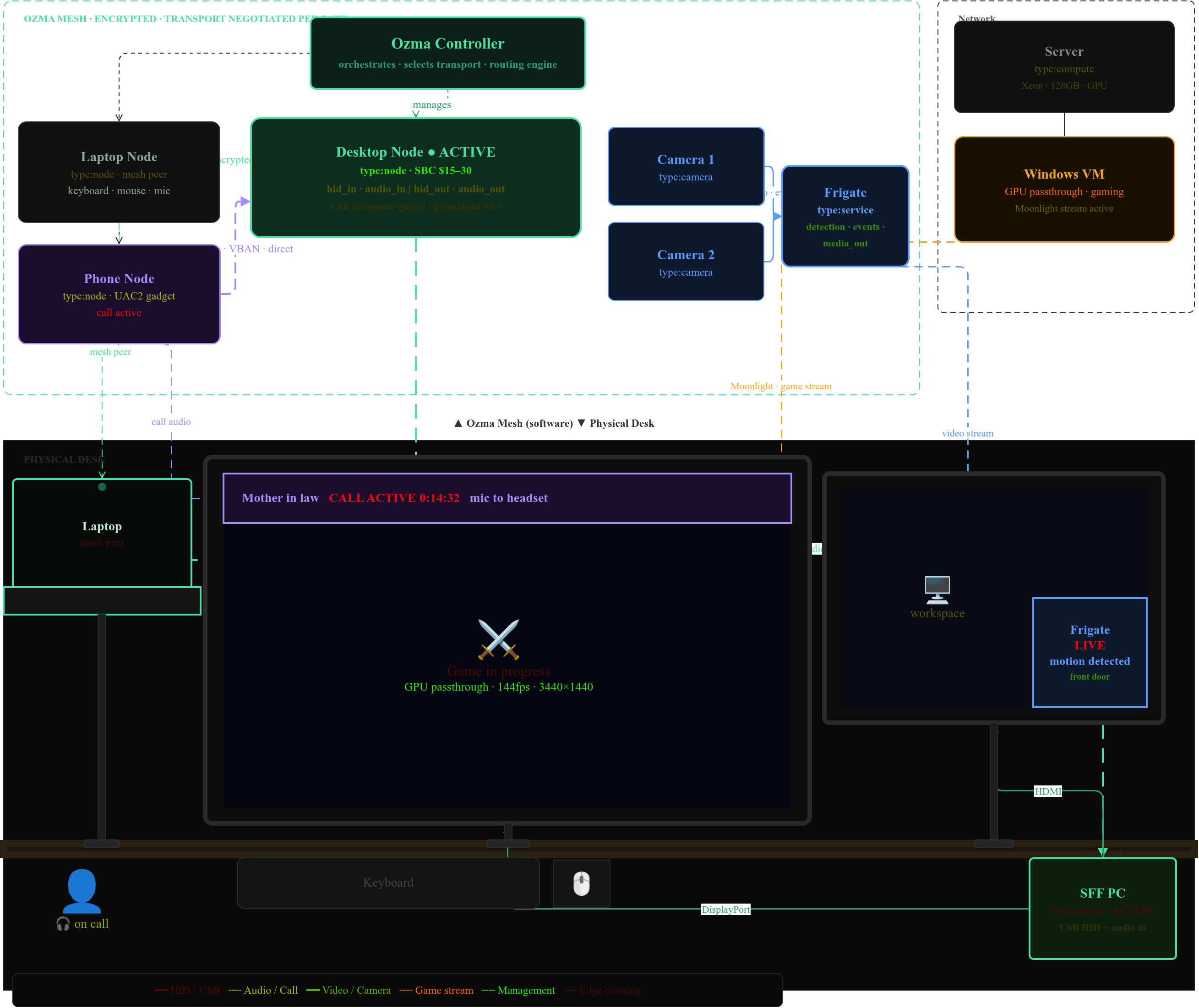
The starting point was a personal problem. Four machines. One desk. A USB KVM switch that introduced display resync lag, dropped audio, and cost $200 for four ports. I knew the routing could be done in software. I wrote a controller daemon, built a node out of a spare SBC, and wired it up. It worked.
Then I added audio routing, because audio is half the experience and hardware KVM switches treat it as optional. Then cameras, because I already had the network fabric and Frigate needed a management layer. Then backup, because the agent was already on every machine. Then compliance, because the data was already flowing. At some point it stopped being a KVM switch and started being something more interesting.
The professional context that makes this possible: I have spent twenty-five years being the person other businesses call when they can't work out why their network is down, why their compliance audit failed, or why their backups haven't run in six months. I have designed identity systems, built monitoring stacks, wired up camera networks, and written the security policies — each time, from scratch, for a fraction of what it should cost.
The insight that connects both halves: the data Ozma collects to run a KVMA router is exactly the data you need to run an IT department. Which machines exist, what's installed on them, who's logged in, what's on the network. Every capability is already there — it just needed something to surface it. That's the gap Ozma fills.